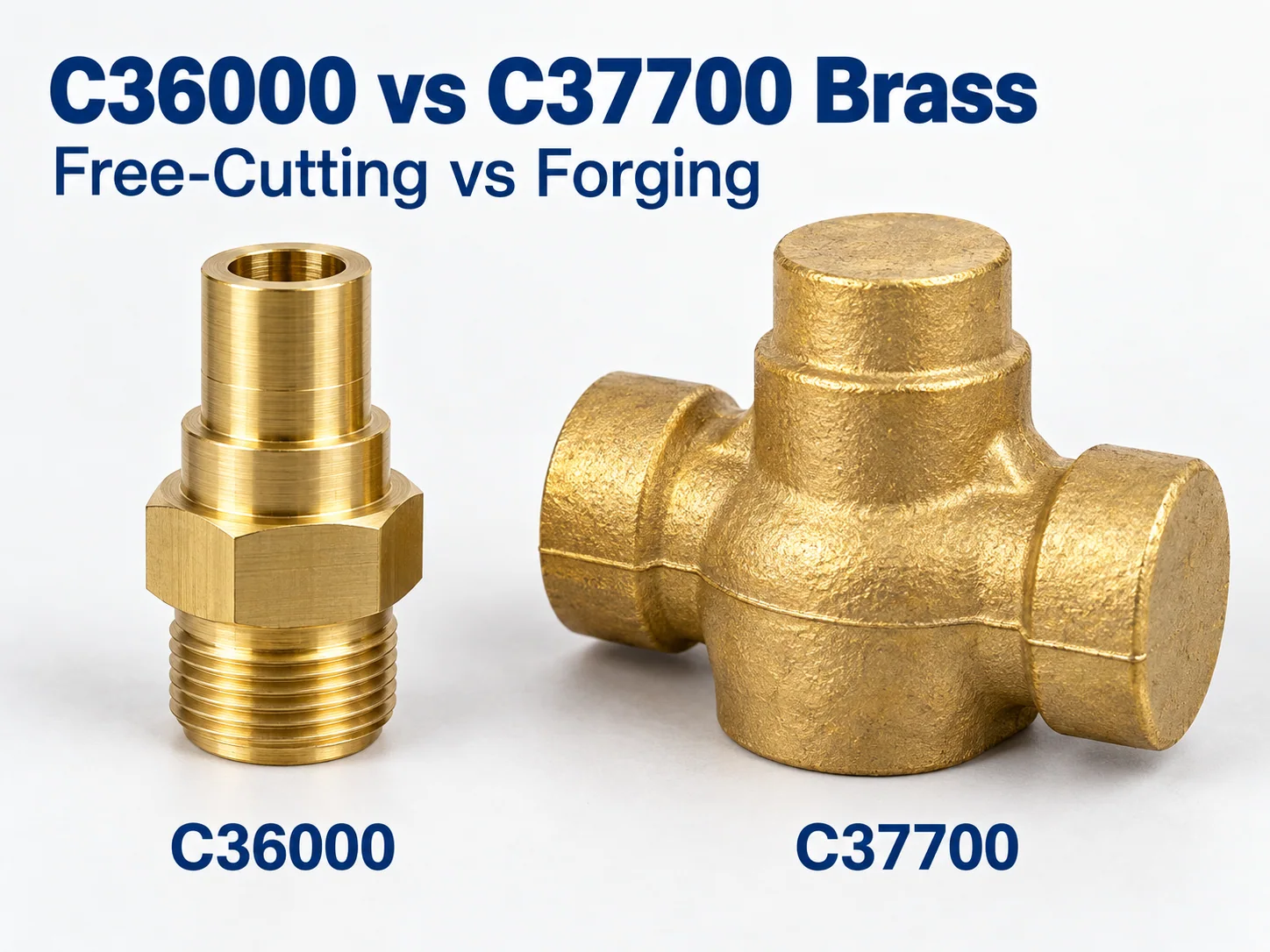
C36000 vs C37700 brass compared on lead content, structure, machinability and compliance — and why neither grade suits crimping, swaging or drinking water.
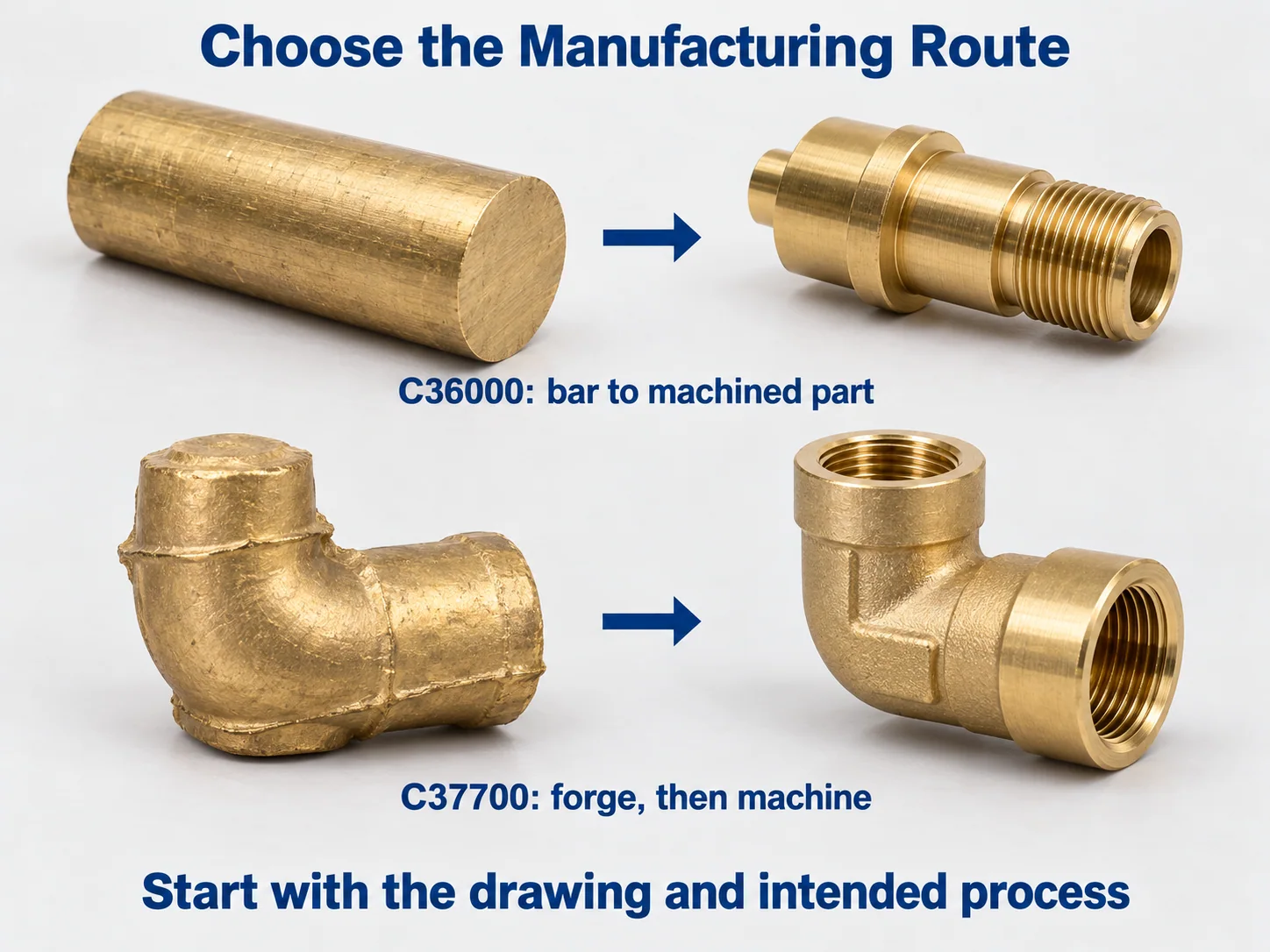
The two grades turn up on the same shortlist more often than they should. C36000 is the free-cutting grade, sold as bar for screw machines. C37700 is the forging grade, sold as stock for hot pressing. They get compared because both are leaded brass that machines well — not because either one can stand in for the other.
The reasons for the comparison are usually practical: one quote came back cheaper, a supplier offered the other grade instead, or someone in the chain raised a compliance question. All three end at the same place — which process is going to make the part.
What separates them is lead and structure. C36000 carries 2.5–3.7% Pb in a mostly alpha matrix, which is what makes the chip break. C37700 carries 1.5–2.5% Pb in a two-phase alpha-beta structure, which is what lets it flow under a die at 650–750 °C.
What the Numbers Say
| C36000 | C37700 | |
|---|---|---|
| Ordered to | ASTM B16, bar | ASTM B124 forging rod · B283 die forgings |
| Cu, % | 60.0–63.0 | 58.0–61.0 |
| Pb, % | 2.5–3.7 | 1.5–2.5 |
| Fe, % max | 0.35 | 0.30 |
| Structure | essentially alpha | alpha + beta |
| Machinability (C36000 = 100) | 100 | 80 |
| Forgeability (C37700 = 100) | not a forging grade | 100 |
| Cold working | poor | poor |
Both ratings are relative production rates, not quality scores. C36000 is 100 by definition and every other copper alloy is measured against it. No current standard test method stands behind the figures — they are industry reference values, so treat them as a ranking and cut a trial part before fixing cycle times. The C36000 Free-Cutting Brass Guide covers how the rating is built.
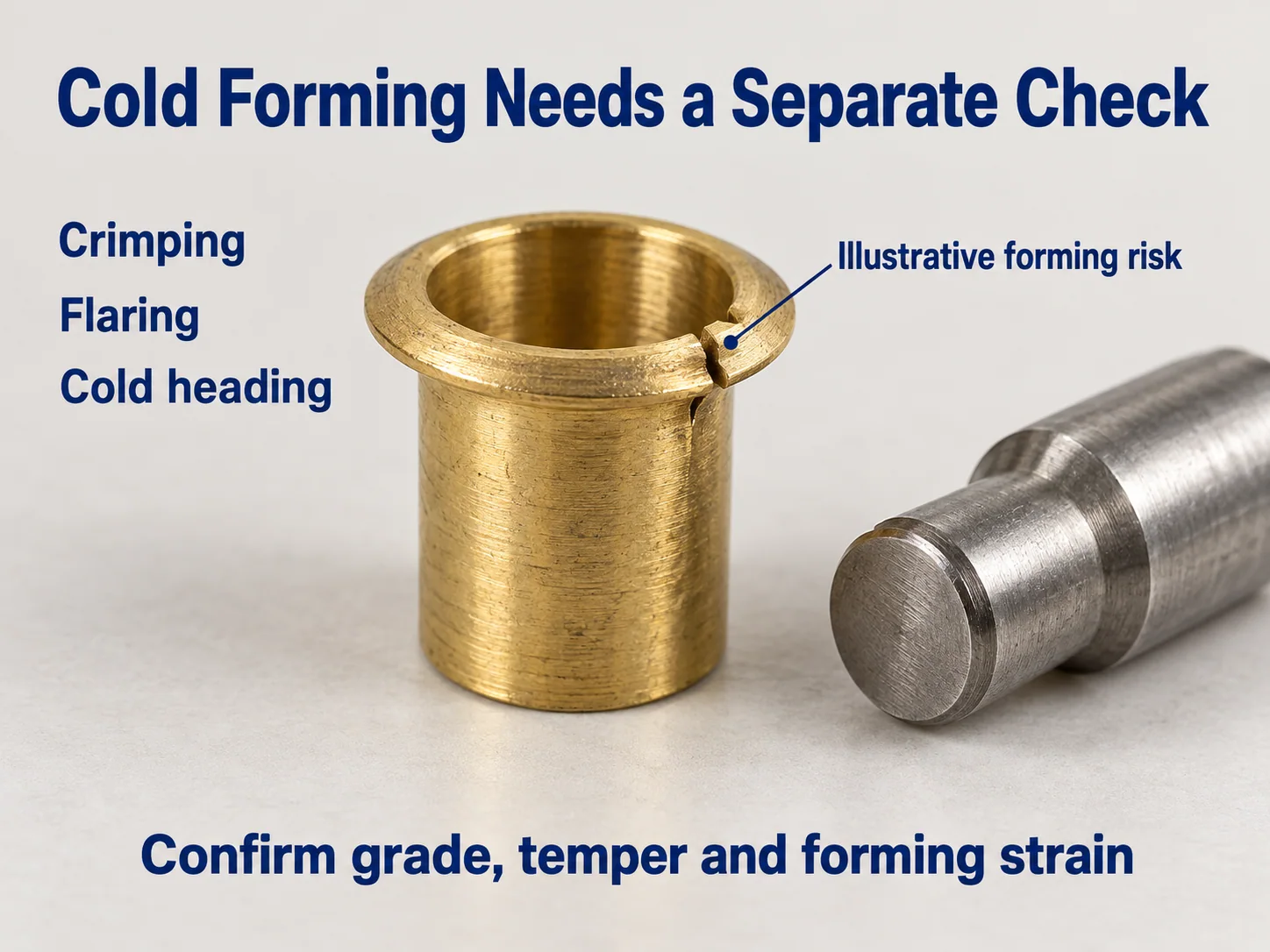
The last row is the one readers skim past. Both grades are poor in cold working — that is not a typo, and it is not a tie. It means neither one is the right answer for a part that gets swaged, crimped, or cold-headed.
Both are stocked as bar: C36000 Free-Cutting Brass in the tempers screw machines run, and C37700 Forging Brass as forging stock for hot pressing.
Why One Cuts and One Forges
Lead does two different jobs depending on temperature.
Lead makes the chip break; it does not make the metal bend. In a cut, lead particles act as a built-in lubricant and a chip breaker. The chip snaps instead of smearing, tool life goes up, and surface finish improves without a second pass. That is the whole reason C36000 exists, and 2.5–3.7% is what it takes to get there.
In a cold forming operation, the same lead sits at the grain boundaries and gives the metal somewhere to start a crack. This is why both grades are rated poor for cold working: the lead that makes them machine beautifully makes them unforgiving to bend.
The structural difference comes from zinc, and it is a threshold, not a trend. Alpha brass holds roughly 35% zinc; past that line, beta phase starts to appear. C36000 sits close to it and stays essentially alpha. C37700 runs about 38% zinc and lands in the two-phase field. That beta phase is the whole reason one grade forges and the other does not: it is harder than alpha at room temperature and soft enough to flow at forging heat.
Heat changes the picture only for C37700. Above roughly 650 °C its beta phase softens, and the two-phase structure deforms without cracking — pressure pushes metal into the die cavity instead of shearing it. C36000 stays essentially single-phase alpha, so heating it makes it softer but not forgeable in the same sense. Putting C36000 in a die is a process error, not a shortcut.
Where It Shows Up in the Part
Machining time. At 80 against 100, C37700 takes roughly a fifth longer per cut. On a part with short cycle times that is a small number; on a part that spends four minutes under the tool it is not.
Swaging and crimping. Neither grade suits it. If your process includes a crimp, a flare, or a cold header, the material decision is not C36000 versus C37700 — it is a different grade or a different process. Annealing before forming buys some ductility back, but it adds an operation and the lead is still there.
Strength. The published figures do not compare cleanly, because the two grades are usually supplied in different conditions — C36000 as half-hard bar, C37700 as annealed forging stock or as a finished forging. C36000 half-hard runs about 55–68 ksi tensile with 18–32% elongation; C37700 as a forging runs roughly 52–64 ksi with 15–25%. Quoting one against the other without stating the condition is how bad decisions get made.
Pressure tightness. This is where forging earns its place. A die closes on the metal and consolidates it, so a forging does not carry the internal porosity a casting would. On a pressure-tight body that matters more than the machinability gap — the C37700 Forging Brass Guide covers the property side.
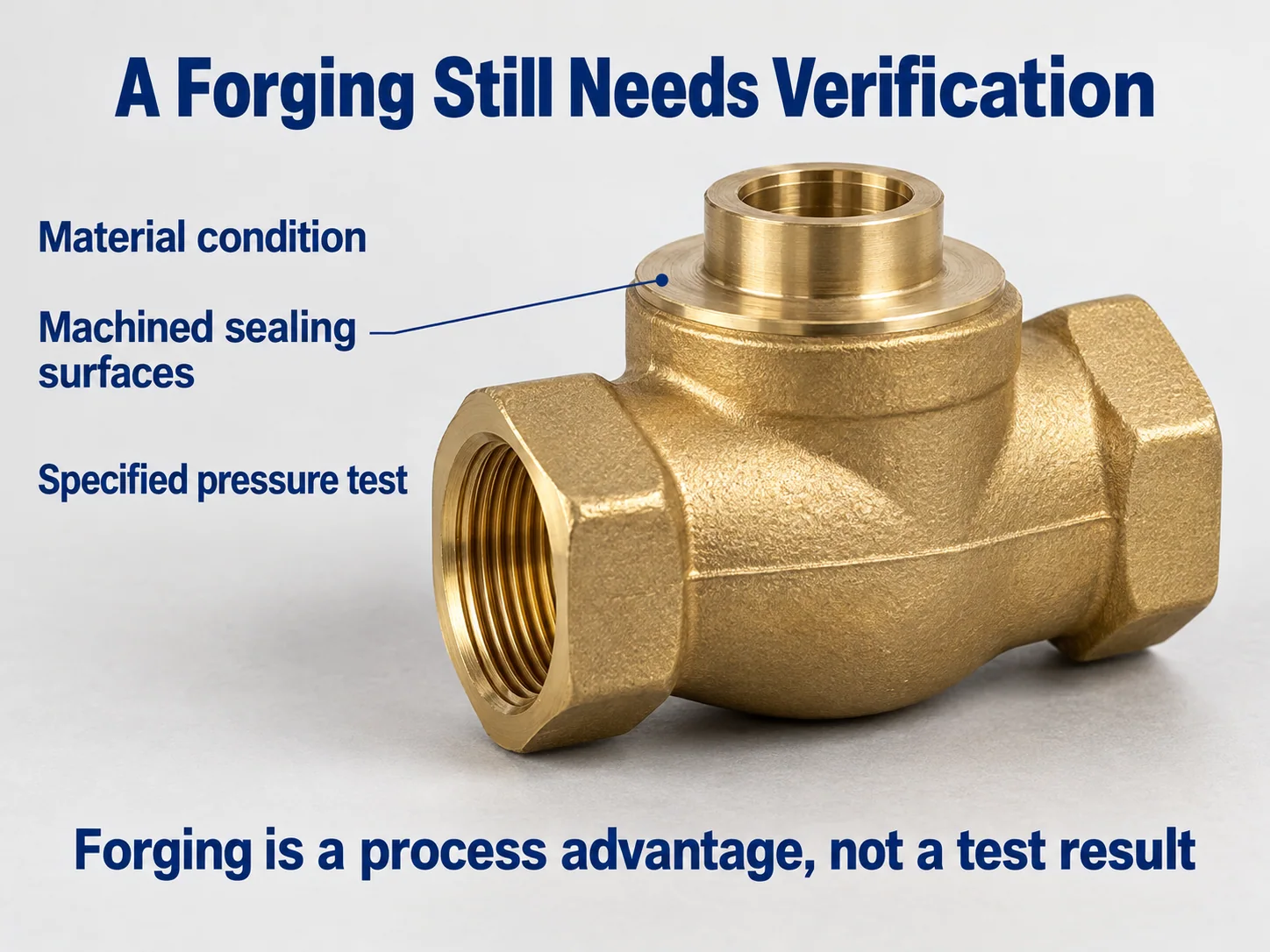
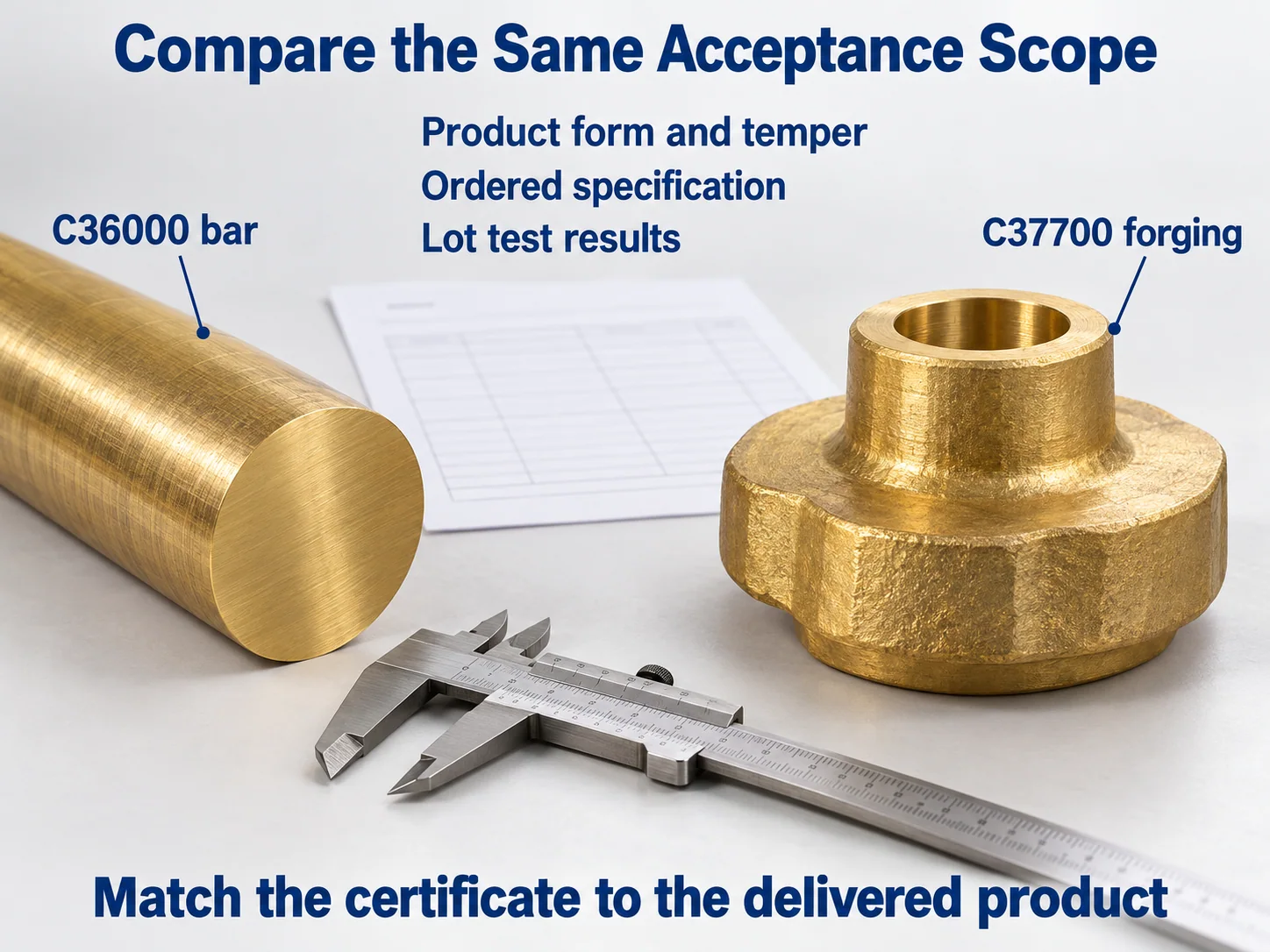
The paper trail. Both arrive with a material certificate, but they certify different standards: B16 for C36000 bar, B124 or B283 for C37700. The certificate carries that lot’s measured values, and those are what the inspection reads — not the range a specification allows.
The Lead Problem Both Share
Neither grade is suitable for potable water, and the gap between them does not change that.
| C36000 | C37700 | |
|---|---|---|
| Pb, % | 2.5–3.7 | 1.5–2.5 |
| US limit, weighted average (NSF/ANSI 372) | 0.25% max | 0.25% max |
| EU limit, drinking water contact | 0.10% max | 0.10% max |
C37700 has less lead, and that fact gets repeated online as if it made the grade compliant. It does not. At 1.5–2.5% it is still six to ten times the US limit and fifteen to twenty-five times the EU one. A lower number is not the same as a passing number.
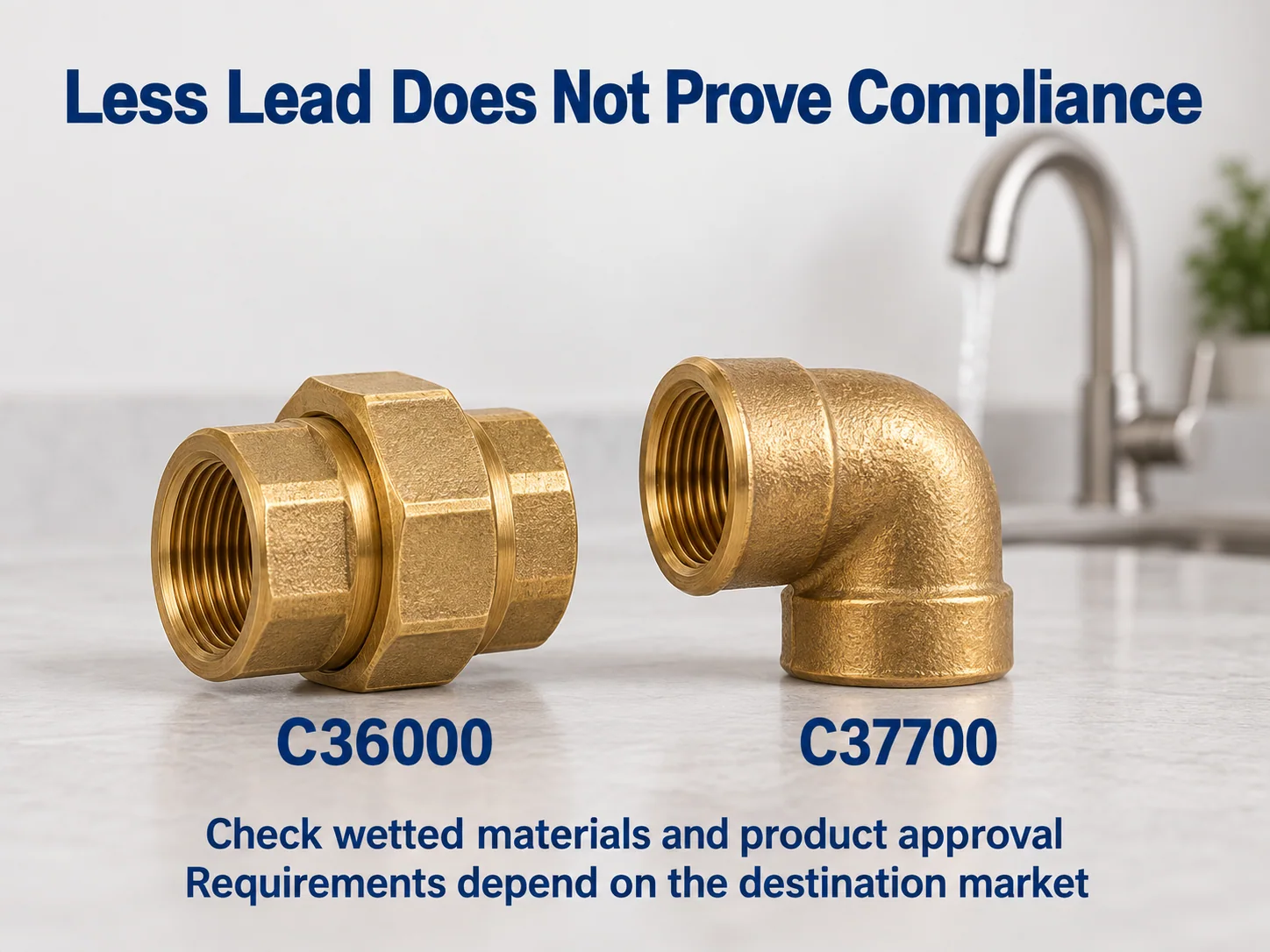
For a drinking water part the choice is neither grade — it is a lead-free substitute, and the constraints are different enough to need their own comparison. Lead-Free Brass: The Four Substitutes and What Each One Costs sets out the options. Where lead is still permitted — compressed air, gas, hydraulics, industrial water that is not for drinking — Leaded Brass: When Lead Is Still the Right Answer explains where these two sit.
Cost: Material Price Is the Smallest Part
A quote comparison that stops at price per kilo will point you at the wrong grade, because the two numbers are not measuring the same thing.
| What you pay for | C36000 | C37700 |
|---|---|---|
| Material | baseline | two to five points less copper, so a slightly lower metal cost |
| Machining time | baseline | about 20% more per cut |
| Tooling | none | a die, if you are buying forgings rather than stock |
| Scrap and rework | a crimp or swage that cracks shows up here | same risk, slightly lower |
| Not on the quote | — | die lead time sits in the schedule |
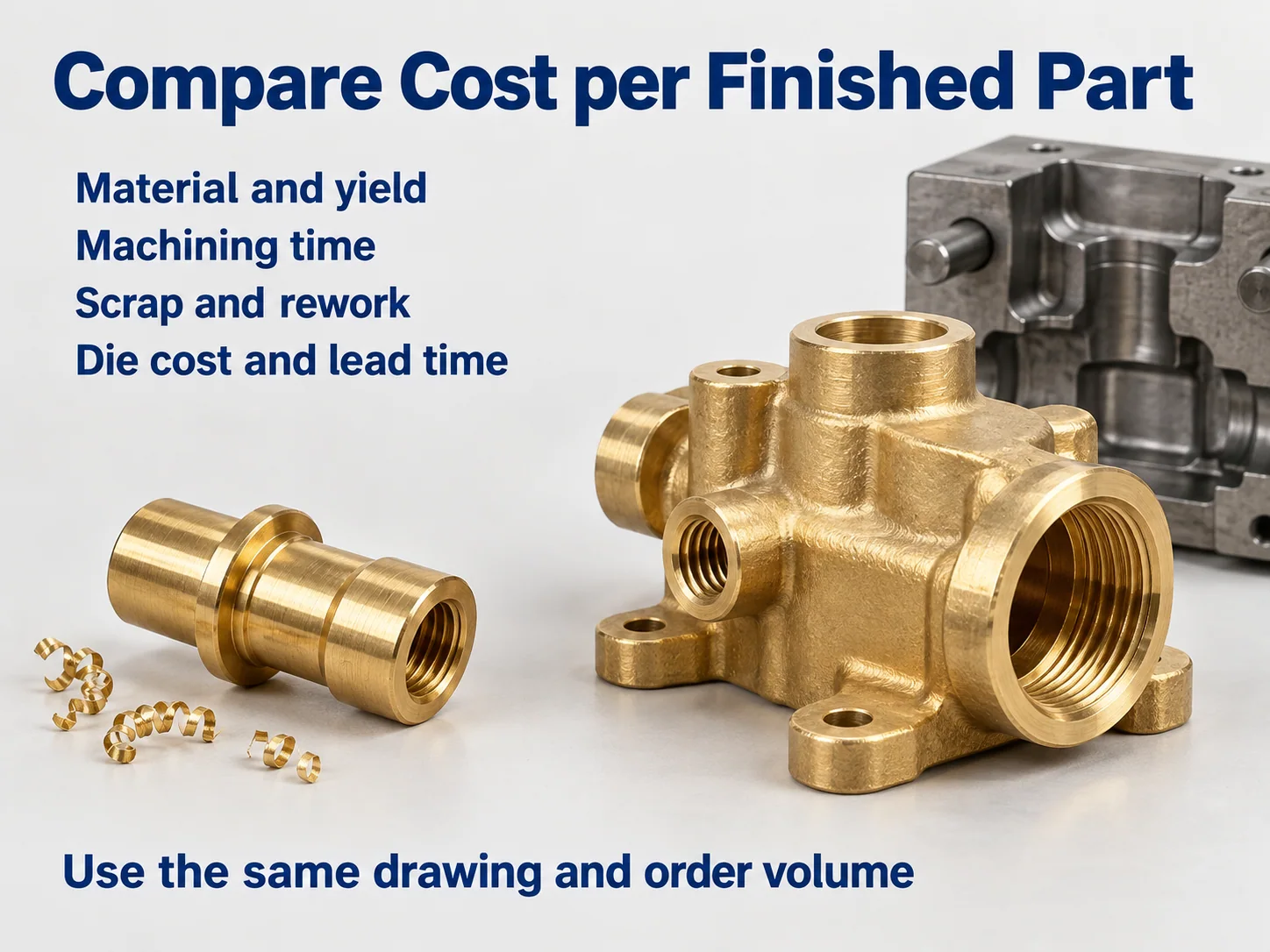
Copper is the expensive element, and C37700 carries two to five points less of it, so on bare metal cost the forging grade can look cheaper. That advantage rarely survives the machining step and disappears entirely once a die has to be paid for.
Build the comparison in four lines rather than one: material cost per finished part, machining time at your own rate, the scrap you actually expect, and the die on a separate line if there is one. The grade question usually falls out of those four numbers without anyone having to argue about alloy preference.
Which One Fits Your Part
| If your part is… | Grade |
|---|---|
| turned or milled from bar, shape already close to the bar | C36000 |
| complex in outline, hot forged close to shape, then machined | C37700 |
| swaged, crimped, flared, or cold-headed | neither — change grade or process |
| in contact with drinking water | neither — move to a lead-free grade |
Two of those four rows send you away from the comparison entirely. That is the honest answer to a question that usually gets answered with a table of machinability numbers.
Whichever row you land on, the quote only becomes comparable when the same information goes out to every supplier: the drawing with tolerances and finish, annual demand and batch size, the process your supplier intends to use, the medium and working conditions, any surface treatment, and the acceptance requirements. A number given without those is an assumption, and the cheaper one usually reflects a lighter scope rather than a better grade.
Conclusion
C36000 and C37700 are not two options on one decision. They are the standard grade for two different processes, and the process is usually fixed before the material question is asked.
That is why the substitute question has no clean answer. A part that gets crimped and a part that touches drinking water both fail on grounds that have nothing to do with which of these two grades is better, and no price difference fixes that.
Send the drawing with the process your supplier intends to use, and the grade question usually answers itself. We machine C36000 bar in house and supply C37700 forging stock where the part suits a die.
FAQ
Can I substitute C37700 for C36000 if my shop machines everything anyway?
Only by accepting a slower cycle. C37700 machines at about 80 against C36000’s 100, so the part gets made — just not at the rate the routing assumed. If the part was designed around C36000 cycle times, expect the quote to move.
Is C37700 low-lead enough for drinking water?
No. At 1.5–2.5% lead it is well above both the 0.25% US weighted-average limit and the 0.10% EU limit for drinking water contact. Less lead than C36000 is not the same as compliant.
Why did my C36000 parts crack after crimping?
Because C36000 is rated poor for cold working — the lead that makes it cut cleanly gives cracks a place to start. Annealing before forming helps, but the right fix is a grade or a process that does not rely on cold deformation of a 3% leaded brass.
Does one grade take longer to arrive than the other?
They differ in what has to be scheduled. C36000 is bar stock, so the lead time is the bar. C37700 bought as stock follows the same logic, but a forging adds a die before the first part exists — that lead time belongs in the project plan, not in the purchase order.

David Huang is a copper materials specialist and Sales Manager at Linsy Copper, with years of hands-on experience supporting global customers in copper and copper alloy sourcing.
He specializes in industrial copper products such as C11000 copper, C10200 oxygen-free copper, brass, bronze, copper sheets, plates, tubes, bars, and custom-processed copper components.
With a practical understanding of copper manufacturing, quality inspection, surface treatment, and export supply chains, David helps customers choose the right materials for electrical, mechanical, marine, construction, and industrial applications.