C52400 Phosphor Bronze
Product Overview
C52400 is a wrought phosphor bronze (CuSn10P) with 9.0–11.0% tin and 0.03–0.35% phosphorus in a copper matrix, plus lead held at 0.05% maximum. Tin provides solid-solution strengthening and the high elastic limit that makes this grade a classic spring material, while phosphorus deoxidizes the melt and raises fatigue strength and wear resistance. It is supplied as plate, sheet, and strip to ASTM B103, as bar and rod to ASTM B139, and as wire to ASTM B159; common tempers run from soft (OS035) through half-hard (H02) to spring (H08/H10).
In the hard tempers C52400 reaches about 550–760 MPa tensile strength, roughly 250–450 MPa yield, 5–25% elongation, and 95–103 HRB hardness, with electrical conductivity near 11% IACS at 8.78 g/cm³ density. It resists atmospheric, fresh-water, and seawater corrosion and holds up against non-oxidizing acids such as dilute hydrochloric and sulfuric acid. Cold-work capacity is good and hot forming is poor, so parts are finished by rolling, drawing, and bending rather than forging; gas-shielded arc welding is rated good and machinability is low (rating 20).
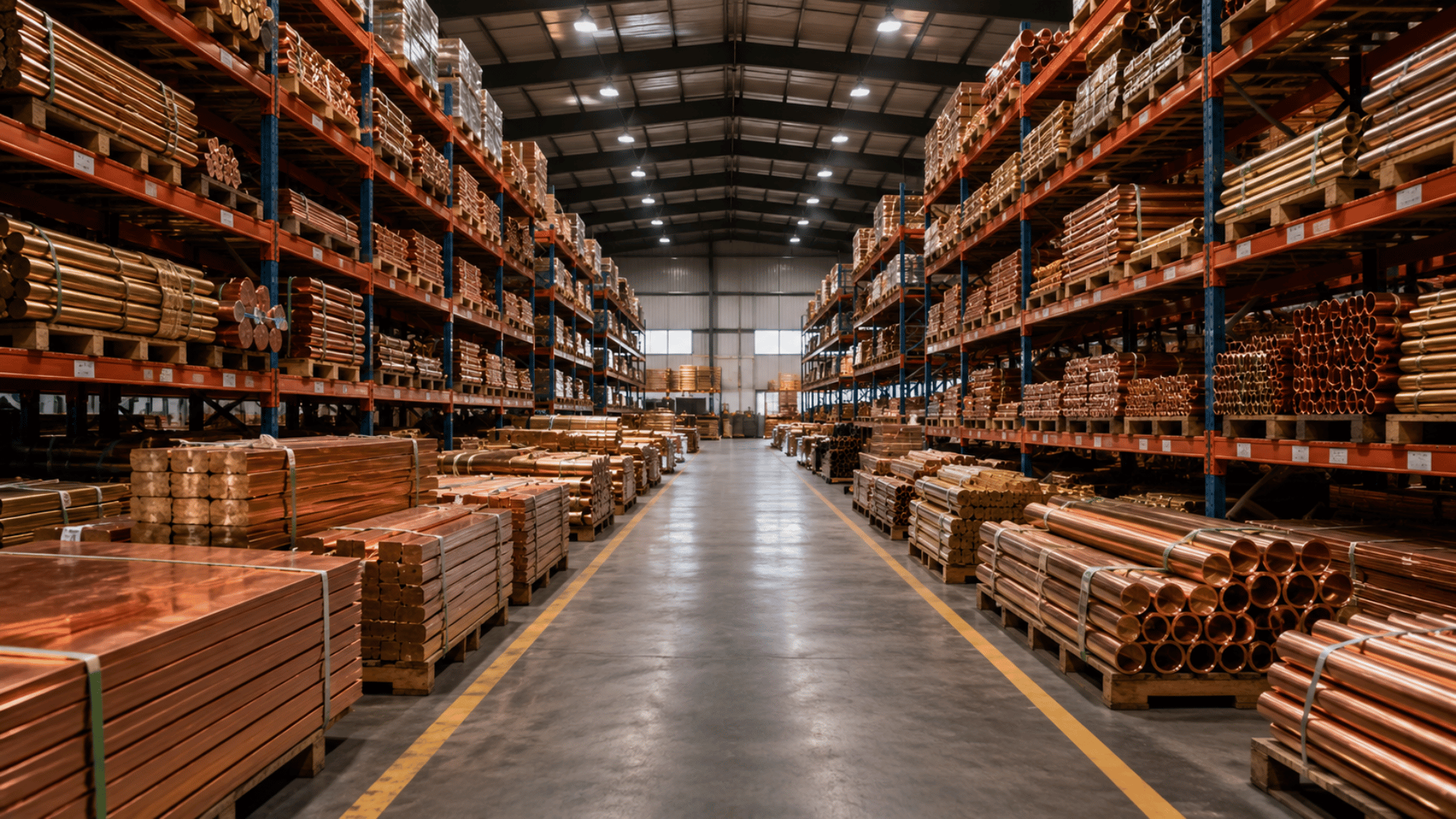
Linsy Copper supplies C52400 phosphor bronze as strip, sheet, plate, rod, and wire with low-MOQ production (typical lead time 10–60 days), in-house CNC machining and surface finishing, an MTR/MTC for every order, and optional SGS testing on request. Contact our Shenzhen team for a quotation within one hour.
Key Features
Available Sizes
| Copper Shape | Thickness (mm) | Width/Diameter (mm) | Length (m) |
|---|---|---|---|
| Bar | - | Φ5-200 | 1-6 |
| Wire | - | Φ0.05-10 | Customize |
| Sheet | 0.25-6 | 500-2500 | 1-6 |
| Plate | 6-200 | 200-3000 | 1-6 |
| Strip | 0.15-6 | 8-610 | Customize |
| Tube | OD: φ2-600; WT:φ0.2-100mm | - | 1-6 |
| Coil | 0.15-6 | 3-1250 | 1-6 |
| Foil | < 0.15 | 10-1350 | Customize |
| Profile | Customized | Customize | Customize |
* Custom sizes available upon request. Contact our sales team for special requirements.
Technical Specifications
Applications & Use Cases
Proven solutions across diverse industries. From aerospace to marine environments.
Frequently Asked Questions
Find answers to common questions about our products, services, and ordering process